Kiawah Island is home to a very healthy population of American alligators (Alligator mississippiensis). Alligators can be seen
in almost all of the 183 brackish and freshwater ponds which are interspersed throughout the island.
General Description
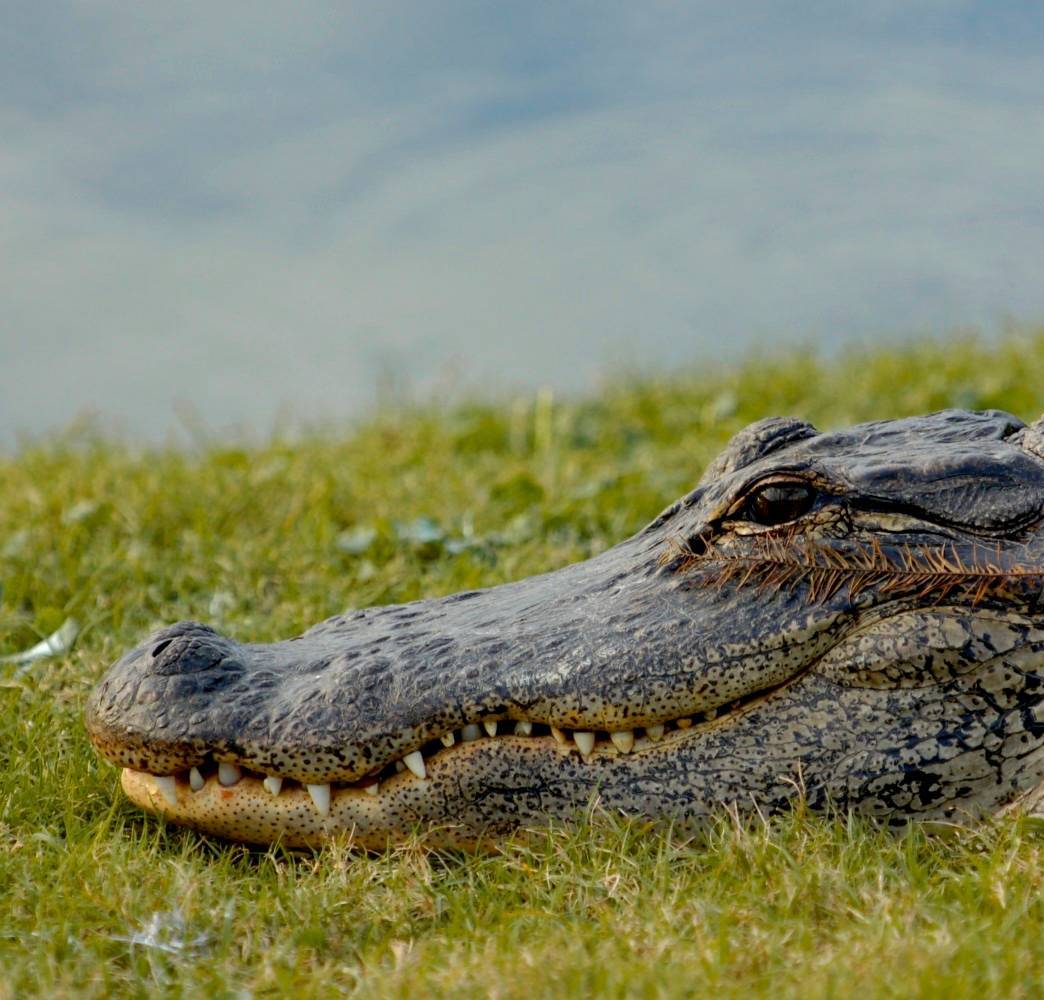
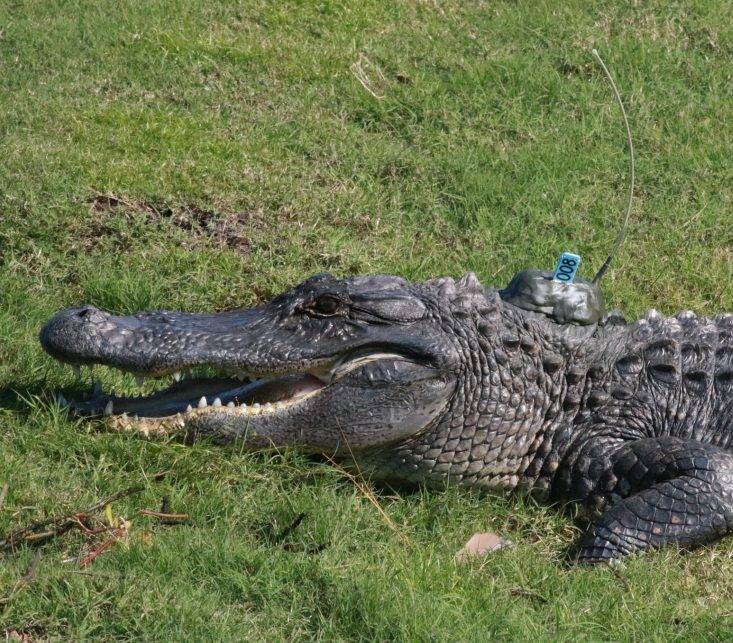
Alligators look like large lizards. They have five toes on the front feet and four on the back
feet. The back feet are webbed to aid in swimming. Their hide is very rough and covered in heavy blackish-colored scales. Hatchlings are typically black on top with yellow blotches or stripes. Both males and females look identical.
Most of the alligators seen on Kiawah will be between 3-8 feet in length, though larger alligators up to 11 feet are present in some areas of the island. Alligators are cold-blooded which means that they cannot self-regulate their body temperature as humans do. For this reason, alligators are most active during the spring, summer, and fall. They will often be seen basking on pond edges in the sun in an attempt to warm their body temperature, especially during colder weather.
Alligator surveys and results
Alligator spotlight surveys are conducted by Town biologists and KICA Lake Management staff each summer. Surveys are conducted for 2 nights along a predetermined route that includes most island ponds. The graph below shows the estimated number of alligators along the route each year. The red line shows the population trend.
Life History
Despite their fearsome reputation, alligators are not always on the prowl for food. Since they are cold-blooded,
they only require about one tenth the amount of food that a comparably-sized warm-blooded animal would. If prey is in short
supply, one meal can last an adult almost a full year. Due to their slow digestion, alligators only need about one pound of food per
week during their active seasons.
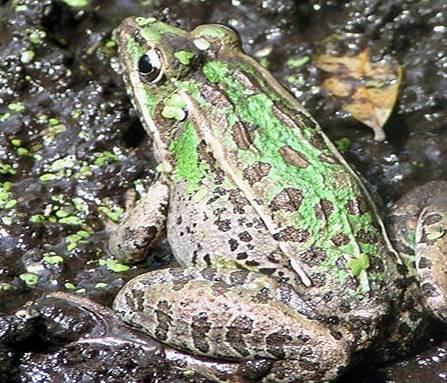
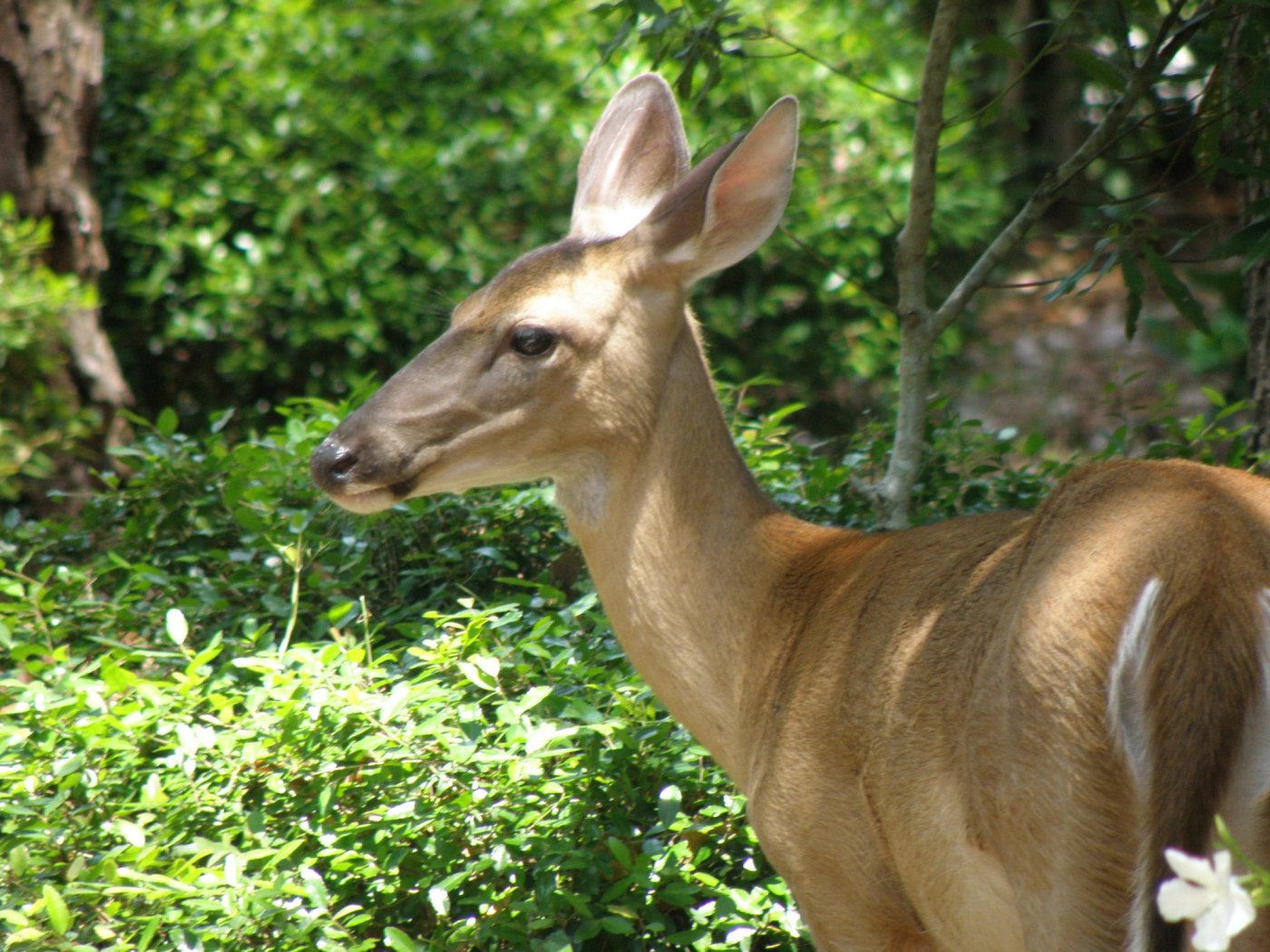
Alligators have a widely varied diet, influenced primarily by the size of the alligator. Small alligators will typically consume insects, frogs, snakes, small fish and turtles. As an alligator increases in size it
will consume larger prey, such as raccoons, wading birds, small mammals, fish, deer, and even other alligators.
With the
arrival of spring, male (bull) alligators begin to bellow to attract females. Mating occurs in April - May and the female
will lay 30 to 50 oblong, white eggs in a mound of mud, stem, stalks, and fronds. Nests resemble a big compost pile and are
typically found along secluded pond banks. The eggs are kept warm and secure in the center of the nest. The female will
stay close to the nest at all times, guarding the nest against predators.
Female alligators may attack any animal, including
a human, that approaches her nest or hatchlings. Generally, their attacks are bluffs intended to scare intruders away, but true
attacks can occur.
Eggs typically hatch in August or September and the baby alligators are often taken to the
water, one by one, by the female. They immediately begin feeding, mainly on insects, small fish, and frogs. Hatchlings will
grow approximately 6-8 inches per year on Kiawah. It takes female alligators 10 to 12 years to reach sexual maturity in South Carolina.
At that time, they are usually about seven feet in length. Female alligators rarely reach 9 feet in length and almost all alligators
greater than 9 feet are males.
Alligators are incredibly adaptable animals and have existed for millions of years. The
only real threat to the alligator is man. Remember, it is against the law to feed or otherwise harass alligators. This
includes activities, such as throwing sticks or rocks. When people feed alligators, they will begin to associate people with
food, creating a very dangerous situation. These animals often have to be destroyed. Town biologists typically remove
2-6 nuisance alligators per year under the state’s Nuisance Alligator Program.